|
(Miquel Ramis)
Keywords: Ciudades chabola, chabolismo, slum
cities, economic refugees, refugiados ambientales,
transgénicos, GMO's...
In this 3rd part we will study the local case...
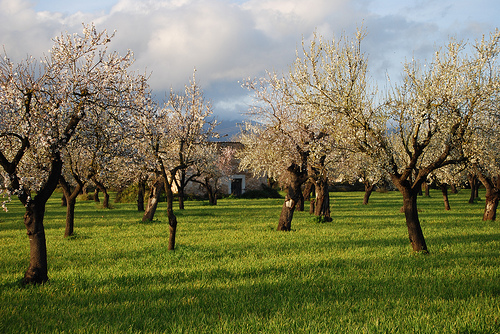
| Mallorca has always been a food producer and combined with its location in the Mediterranean, it has long been in a strong position amid the maritime trade routes.
Common produce includes oil, fish, meats, olives, almonds, wheat, oranges, potatoes, vegetables and even lignite.
( Img: www.flickr.com/photos/xiscoinca/4379696039/) |
|
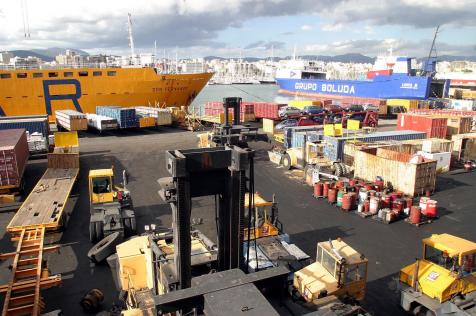
However, today 9 out of 10 foods are imported such as apples from Chile, Argentine shrimp, cod from Iceland, New Zealand lamb or pork in France.
Except for a few producers in Sa Pobla and Muro, who export almost all of the crop to England, most ranchers and farmers have had their day, and will soon join the ranks of the unemployed while we are losing the last shreds of food sovereignty that remained.
( Img://ultimahora.es/mallorca/noticia/noticias/local/el-govern-pide-un-transporte-maritimo-mas-barato-y-frecuente.html)
|
|
Worldwide, GMOs pose a lethal trap with devastating consequences for local economies that depend entirely on the fluctuating price, speculatively decided in a few commodity auctions.
On the global market, rices of staple foods such as rice have such wild swings that make it impossible for farmers to plan their strategy. The sale price does not depend on how good or bad their harvest is but on financial operators who are risking relatively little if the crop is bad…next time they can sell iron instead of rice.
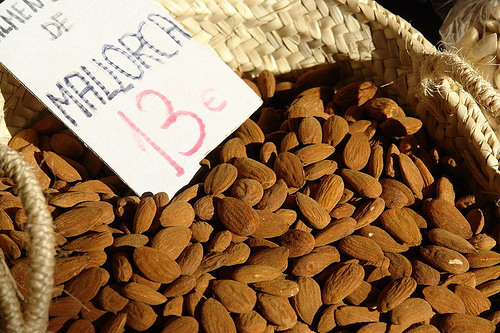
Does anyone remember the almond was paid at 2 euros and that the price covered harvesting labor, and allowed landowners to pay their taxes on the land, tilling and replanting?
Now is not worth the effort to continue to collect, and yet the price has not changed substantially over the years.
If there are a few differences: Almond is prettier, elongated, bland. It comes from California and the mallorcan farmers have to put money in their pocket to pay taxes, stop selling almond, or be particularly skilled to sell at a price considerably higher than the purchase without adding value,
The use of the word "Speculador" does not pretend to be offensive, but descriptional: someone who sells something at a higuer price without putting added value...
which brings us to ...
(Img: http://www.flickr.com/photos/mike828/sets/72157604040789790/detail/)
|
|
Financial circuits:
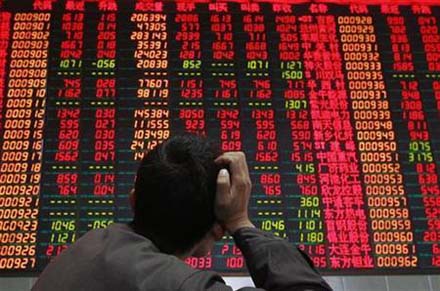
"For every economic transaction in the real economy, 15 financial operations have been generated"
Formerly,the economy worked because,before selling again, the buyer added value to the product and created successive products:
Buying wheat- making flour - selling flour and other products (straw,seed,bran...)
Comprar trigo - hacer harina - vender harina
( subproductos: salvado, harina fuerza, normal...)
Buying flour -making bread(white bread, brown, buns, cakes, bread yeast ...)
Buying bread - eating it, making stale bread crumbs, soup, croutons, breaded foodstuffs…
( Img: www.gurusblog.com/archives/desplome-bursatil/06/07/2010/.)
|
|
Now a product can change 15 times hand in the purchase and sale in international markets, leaving the bulk of benefits to people who do nothing , in fact these people almost never get to physically see the product, just numbers on a computer.
When naming the "fair trade" to a kind of economic transaction that allows the producer to profit proportionate to effort and risk undertaken (storms, droughts, pests ....) by default, the term "unfair trade" is for the governing system. Paying 20 cents to a local farmer in Sa Pobla then see your tomato exposed in the shop to 1.20 euros, is obviously unfair..
Intermediaries can be essential to mobilize tomatoes from Almeria to Madrid or Berlin, but on an island 60 km from one side to the other, the 900% profit seems unjustified.
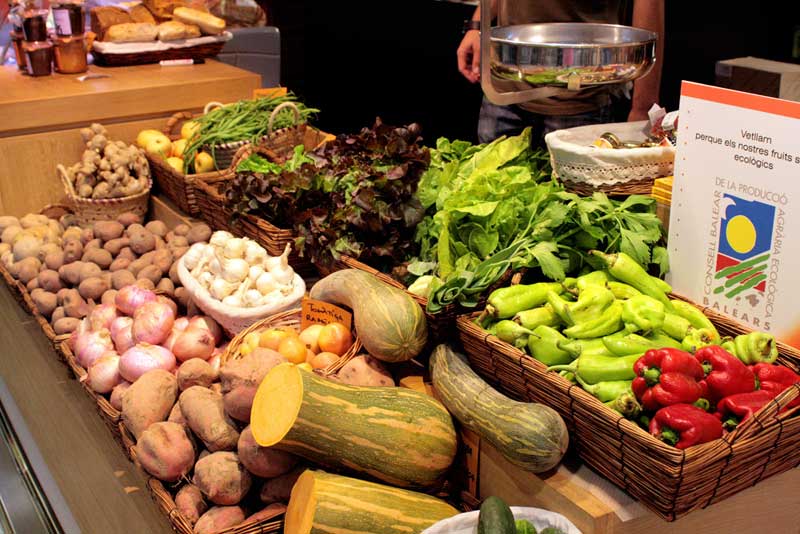
Direct purchase from local producers and the right of this to save, select and improve your seeds or products are basic needs to consolidate food sovereignty.
We give the producer a fair profit, we prevent abandonment of the fields and thus help contain the rural exodus that also generates socially disintegration and unstructured communities.Los intermediarios pueden ser imprescindibles
para movilizar tomates de Almería a Madrid
o Berlín, pero en una isla de 60 km de
lado no parecen justificar su márgen de
900% de beneficio.
La compra directa al productor local y el derecho
de este a guardar, seleccionar y mejorar sus semillas
o productos son básicas para consolidar
nuestra soberanía alimentaria.
Dando una ganancia justa al productor, impedimos
el abandono del campo y por tanto ayudamos a contener
el éxodo rural que además genera
desarraigo y desestructura socialmente las comunidades.
( Img: www.dorigen.es/vinos-aceites-mallorca/fruta-verdura-ecologica.php.) |
|
See Soberanía energética
|