|
Keywords: Food Sovereignty, water consumption, butterfly effect...
In this second part we will analyze why something apparently innocent like buying in a supermarket can generate migration. It is important to remember that NOT everyone wants to live in a city; most newcomers were forced to migrate due to the conditions that allowed survival has disappeared. They are called environmental or economic refugees.
|
TRADE:
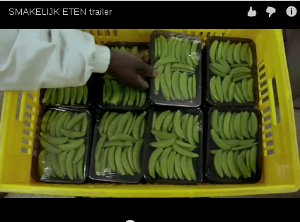
Buying beans or corn from Kenya, Ethiopia or Senegal from a supermarket is not a neutral act. These foods come from the best farmland, and monopolize vital water for local populations, which incidentally they do not have access to. Africa has great problems due to drought and the canals are used for exporting crops. Consequently the nomadic shepherds run out of water to feed their livestock and women have to walk kilometres every day carrying heavy jugs of water to their homes. If we opted for local foods we could reduce the amount imported, and stop helping to create an aberration from the point of view of energy and transport. This would mean more jobs and food for the locals and less importation and food miles.
As if this were not enough, these vegetables contain a high organic load in the form of "virtual water" (water that has been necessary to cultivate) that does not withstand ethical analysis. It is unacceptable that countries experiencing drought to export food to Europe while the local people go hungry. It is also unethical that a formerly Universally shared water is now directed for exportation crops, causing conflicts and lead to water wars.
(Img: Dutch Documentary "Have a good meal" which shows the contradictions of the current system food production.) |
|
|
MONETARY ISSUES:
A salary of 1000 Euros/ month has now caved to on average to 426 Euros per month. But the living costs will not be halved, some remain fixed such as: rent and food ... whilst others increase such as electricity, petrol or butane. A person cannot survive with 426 Euros per month, especially with one or more children, or a divorced paying a pension.This leads to many to find the rest in the black economy, and not paying taxes to the state.
Since there are not many opportunities to increase revenue people have to focus on costs. Subsistence food gardening produces quality vegetables keeping the hands and mind busy whilst preserving their self esteem and at little or no cost.
View courses and workshops
|
|
|
WATER CONSUMPTION:
How much water is consumed to produce 1 ton of grain? Hint: Producing a kg of steak costs us twenty times more resources than a kg of vegetables. A kg of animal protein consumes 100 times more water than a kilo of vegetable protein.
The book "The Food Revolution" by John Robbins says that "you can save more water by not eating a kilo of meat than not showering for an entire year." It is founded on calculations made which state that a vegetarian diet on average consumes less water (1,100 litres of water per day), whilst a non-vegetarian in the United States requires 16.000 litres of water per day.
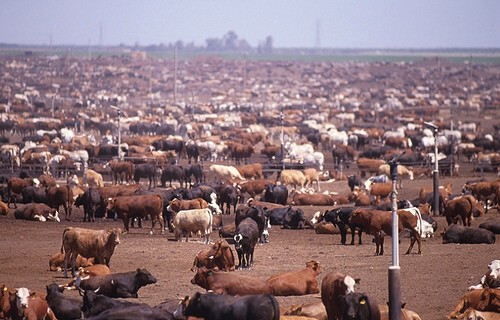
Commercial production of meat depletes water resources. In addition, farm animal waste is dumped directly into rivers or infiltrates into aquifers which in turn creates nitrites contamination. Meat production creates ten times more pollution than residential areas and three times more than industry.
(Img:A CAFO, concentrated animal feed operation.// animalblawg.wordpress.com /)
|
|
|
THE BUTTERFLY EFFECT:
This theory proposes that a sensitive dependency on initial conditions in which a small change at one place in a deterministic nonlinear system can result in large differences in a later state in the future.
For example, The U.S cultivates a lot of corn and 1 ton of corn alone consumes about 600 litres of diesel oil and large amounts of natural gas and oil are used to make fertilizer. This is not only bad for the environment but a large volume is exported because cereal farms are subsidized by the U.S. government, allowing them to sell cereal in Mexico or Nigeria at lower prices than the local farmers, which in turn ruins the local economy. Another similar example is the so called "soybean republic" in Argentina, Paraguay, Uruguay and Brazil. Argentina spends more than 50% of its total arable land in this monoculture, sweeping away millions of hectares of forest while experiencing difficulty feeding its population since the entire production is exported for overseas livestock feed and biofuel production.
- 1/3 or the total peanut crops of Africa are exportad to feed East Europe herds.
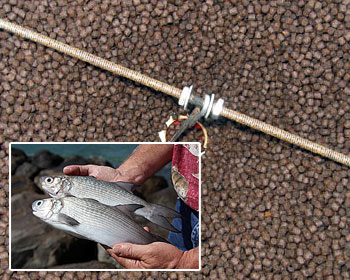
- 1/3 or the total amount of captured fish is used to make animal feed (for hervivors and grainvores)
|
|
|
LOCAL EXAMPLES:The chicken-fish. The transoceanic lentils.
To produce one kg of chicken protein needs 20 kg of fish protein in form of animal fodder.
Spain imports lentils from Argentina, almonds from California and pumpkin seeds from China. These crops that were traditionally grown in Spain are now ruined because the consumers buy the cheaper imported foods.
Suddenly words like "vegetarian", "locally produced food" or "food sovereignty" take on a very different meaning.
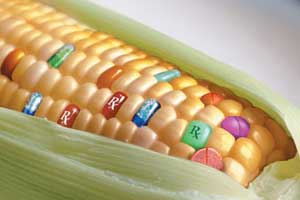
(Img :// viviendosanos.com/2010/04/alimentos-transgenicos.html.)
|
|
|
FACTS:
In short, the insane system of industrial food production is:
- Puts unsustainable pressure on soils, ecosystems and fisheries
- Causes pollution and depletion in soils and groundwater by fertilizers, pesticides and manure.
- Generates a transnational circuit foods only available to a few companies
- Ejects the peasants and fishermen, forcing them to migrate to the cities.
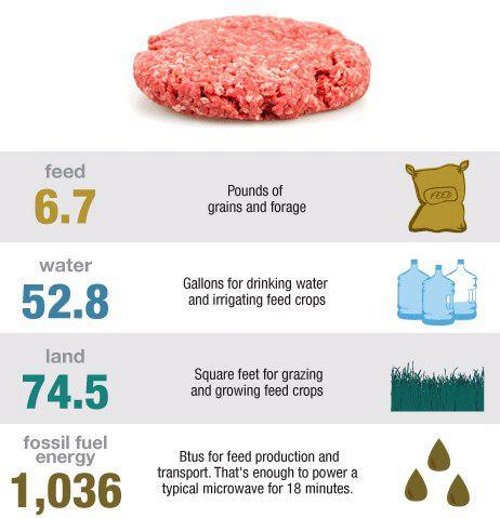
Img: Cereals, water, fossil energy and land needed to produce a single hamburger
( Img:http://fis.com/)
| |
|
FOOD Inc:
In the U.S., only 4 companies control 95% of meat production, and therefore design "products" under the requirements as major customers.
For example, when McDonalds decides to create a "McChicken Burger" to meet the demand it asks their suppliers to produce their product at a certain price and have it shipped to their branches worldwide. For their burgers taste the same in any country, the formula is very simple: each burger does not contain a single animal, but hundreds, from half a dozen countries. This increases the chances of infections or diseases exponentially, so the meat is bathed in a solution of ammonia and is impregnated with preservatives. The important thing is that providers adapt their production chains through the centralized hatcheries and slaughterhouses to meet the demand by their biggest customers.
McDonalds, Auchan, Carrefour, Unilever, Nestle and Danone are huge multinationals companies who do not have any qualms about selling products at prices below their actual market price, preventing the development of fair trade food that would allow millions of small farmers to earn a decent living.
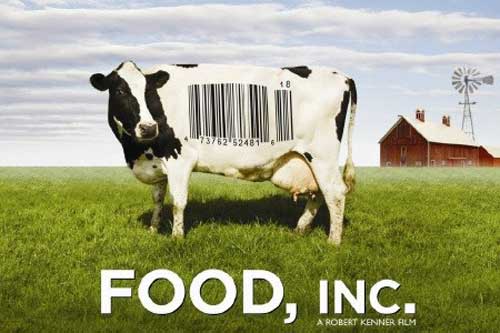
( Img: Poster of the documental Food Inc, from Robert Kenner.2008.)
(Img :/ / viviendosanos.com/2010/04/alimentos-transgenicos.html.)
| |
|
BUTTERFLY EFFECT II:
The IPPC ( Intergovernmental Panel on Climate Change) predicts an average rise of 3 degrees celsius of termeratute. Less known is that, per each degree that the temperature rises, the atmosphere absorbs 7% more water: more droughts, more flood-draught cycles.
( Img: Dry Guadalquivir river bed in Cordoba city.)
|
|
|
See part III: Mallorca
Notes
1) French Revolucion - Wikipedia: "...From the economic point ot view, the huge state debt was out of control, exacerbated by the extreme social unbalance and high taxes that the privileged-noblemen and church- had no obligation to pay. The State expenses rose while the agricultural production descended, causing serious food scarcity in the previous months to the Revolution. The social and political tension, contained for a long time, unleashed into a great economic crisis, mainly because two issues: the french collabotation with the USA independence ( creating a giang deficit) and the rise of agricultural prices."
Does anybody notice any analogy with the current situation?
|
|